
With its unwinnable war on Iran, the U.S. urgently needs to rethink the illegal and corrupt policy of aggressive war it has pursued since 2001, write Medea Benjamin and Nicolas J. S. Davies

With its unwinnable war on Iran, the U.S. urgently needs to rethink the illegal and corrupt policy of aggressive war it has pursued since 2001, write Medea Benjamin and Nicolas J. S. Davies

Pine Gap is a garrison outpost dominated by the U.S. imperium that defiles sacred native land and aids Israel in its cleansing conflict against Palestinians, writes Binoy Kampmark.

Washington’s current U.S. buildup of the military industrial complex will certainly prove devastating — not just on U.S. foreign and domestic policies but also on the economic prospects of average Americans, writes William Hartung.

With New START now expired, the United States’ withdrawal from arms control treaties and its embrace of nuclear “warfighting” doctrines are raising the risk of catastrophic conflict between nuclear powers.

An assortment of new firms, born in Silicon Valley or incorporating its disruptive ethos, are beginning to win lucrative military contracts, writes Michael T. Klare.

William Hartung reports on a resurgent network of nuclear hawks who want to build more kinds of nuclear weapons and ever more of them.
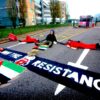
Dozens of companies that supply Israel’s war machine face a growing campaign to end U.K. complicity in crimes against Palestinians, write Sam Perlo-Freeman, Khem Rogaly and Anna Stavrianakis.

Oppenheimer should be required viewing by all those in Washington who are bent on spending $1.7 trillion over the next decades to build new nuclear weapons to kill us all, writes Marcy Winograd.

Anyone who’s paying attention knows the behavior of the U.S. war machine is as relevant to Australians as it is to Americans, writes Caitlin Johnstone.
In SIPRI’s latest tracking, the U.S. remains dominant, China is in distant second, Russia has semiconductor and sanctions problems, Israeli sales are boosted by the Washington-mediated Abraham Accords and a Taiwanese company enters the top 100 for the first time.