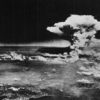
The film Oppenheimer has reignited discussion of the political and moral circumstances surrounding the U.S. atomic attack 78 years ago today on Hiroshima. Here are 10 articles CN ran on the 75th anniversary exploring the debate over the bomb.

The film Oppenheimer has reignited discussion of the political and moral circumstances surrounding the U.S. atomic attack 78 years ago today on Hiroshima. Here are 10 articles CN ran on the 75th anniversary exploring the debate over the bomb.

Proposing that foreign policy be subjected to democratic processes is a call, essentially, to revolution.
In this introduction to the memoir of a Nagasaki bombing victim, historian Peter Kuznick shows why the bombs were dropped and how some victims’ anger propelled the Japanese anti-nuclear movement.
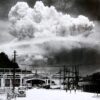
Japan was ready to surrender, making the atomic bombings of Hiroshima on Aug. 6, 1945, and Nagasaki two days later, totally unnecessary and morally indefensible, say a panel of scholars in two video discussions.

Exclusive: “The Untold History of the United States” shakes up the traditional recounting of the last century, forcing Americans to rethink key assumptions, but director Oliver Stone and historian Peter Kuznick have not written a people’s history, says Jim DiEugenio…
Exclusive: Director Oliver Stone and historian Peter Kuznick offer a major reexamination of modern American history in “The Untold History of the United States,” which has many strengths amid a few shortcomings, writes Jim DiEugenio in this first of a two-part…
Over the decades, the U.S. has grown into a place of myth and outright lies rather than empiricism and reliable history. In a new book and TV series, director Oliver Stone and historian Peter Kuznick challenge the faux reality, says…