An extensive and historically unprecedented set of international institutions offer invaluable tools for pursuing what Immanuel Kant called a “federation of free states,” writes Jeffrey Sachs.

An extensive and historically unprecedented set of international institutions offer invaluable tools for pursuing what Immanuel Kant called a “federation of free states,” writes Jeffrey Sachs.

The United States is interested in safeguarding the profits of monopoly capital, which carries politicians in Washington around in its pockets like loose change, writes Roger McKenzie.
“I once was corrupted by the hatred that comes from fear generated by ignorance.” The author offers a text of a speech he wrote, but will not be giving at the Feb. 19 antiwar rally in Washington.
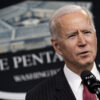
In his annual examination of the U.S. “national security” budget, William D. Hartung finds budgetary malpractice on a grand scale.

The military industrial complex’s more than $10 million in annual campaign contributions both reward and encourage Congress to shovel money at the Pentagon, finds the advocacy group Public Citizen.
Sadly, but all too predictably, Biden’s decision to withdraw U.S. troops and contractors from Afghanistan hasn’t generated even the slightest peace dividend, writes William D. Hartung.
When war is profit, death ensures a healthy bottom line, writes Christian Sorensen in this final installment of his five-part series on the military-industrial-congressional complex.

William Hartung says the bombing of Gaza this month by the U.S.-financed and supplied Israeli military is just the latest example of the devastating toll exacted by American weapons transfers.

Christian Sorensen maps out the global system of weapons mongering. Second in a series of five articles on the U.S. military-industrial-congressional complex.
Profit alone drives the war industry, leaving behind piles of corpses, writes Christian Sorensen. First in a series of five articles about the military industrial congressional complex.