Lawyers for the WikiLeaks publisher — in a final bid on Tuesday to stop his extradition — fought valiantly to poke holes in the case of the prosecution to obtain an appeal.
Lawyers for the WikiLeaks publisher — in a final bid on Tuesday to stop his extradition — fought valiantly to poke holes in the case of the prosecution to obtain an appeal.
As with previous judges who have ruled on the WikiLeaks publisher’s case, Justice Jeremy Johnson raises concerns about institutional conflicts of interest, write Mark Curtis and John McEvoy.
More than a generation ago, Afghanistan won its freedom, which the U.S., Britain and their “allies” destroyed.
The welter of analyses by pro-Israel think tanks across the West on the coming conflict between the Shia resistance movement and the IDF has missed a crucial factor, writes John Wight.
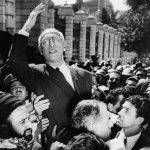
Declassified British files highlight a little-known aspect of the joint MI6/CIA coup in 1953 against Iran’s democratically elected government, Mark Curtis reports.

The year after he protected Jonathan Evans from possible prosecution, the U.K. Labour leader — then senior public prosecutor — went to the spymaster’s farewell drinks, paid for by the security agency, Matt Kennard reports.
A short history of neo-Nazism in Ukraine in response to NewsGuard’s charge that Consortium News published false content about its extent.
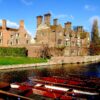
A former MI6 chief and an ex-C.I.A. officer are offering a program for budding intelligence practitioners at Magdalene College, Cambridge — one of several U.K. universities with links to British intelligence, Mark Curtis reports.
In an interview with Matt Kennard, the former Labour Party leader speaks candidly about British media, the U.K. military and intelligence services, Israel, Keir Starmer, Julian Assange and Saudi Arabia.
Shadowy U.K. intel figure Hamish de Bretton-Gordon was at the forefront of chemical weapons deceptions in Syria. Now in Ukraine, he’s up to his old tricks again, writes Kit Klarenberg at The Gray Zone.