Rev. Munther Isaac’s Christmas Liturgy of Lament in Bethlehem dishes out a searing critique of Western hypocrisy amid genocide in Gaza, writes Mick Hall.
Rev. Munther Isaac’s Christmas Liturgy of Lament in Bethlehem dishes out a searing critique of Western hypocrisy amid genocide in Gaza, writes Mick Hall.
Jonathan Cook examines two articles in Haaretz that form the backbone of Western political and media claims about mass rape by the Palestinian resistance group.
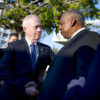
Defense Minister Yoav Gallant is at the top of the dossier of 40 commanders that Democracy for the Arab World Now (DAWN) submitted to the International Criminal Court in The Hague.
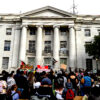
The congressional committee hearing of three elite university presidents earlier this month slandered the Palestine solidarity movement on college campuses, writes Natalia Marques.
Ann Wright says Attorney General Garland must either drop the Trump-era case against the WikiLeaks publisher or move to indict The New York Times publisher on same charges.

As ideologies harden to fanaticism and people with banners herd into warring camps, it remains possible — still — to stand above the fray.

Pro-Palestinian Israeli activist Miko Peled explains to a Melbourne, Australia audience Thursday how Israel stole Palestinian cities and farmland in 1948 and has continued its ethnic cleansing until today’s brutal operation in Gaza.

Indonesian and Australian media are largely silent on Prabowo’s record in East Timor, writes Pat Walsh. This leaves voters in the dark about on an extended and revealing period of the likely next president of Indonesia.
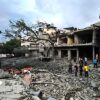
The problem isn’t “global inaction” to prevent mass atrocities, as The Guardian claims, writes Jonathan Cook. It’s intense U.S. and U.K. support for atrocities so long as they bolster their global power.