Consortium News is appealing the decisions taken by the two social media giants.
After a history of U.S. bullying and humiliation — from a broken promise not to expand NATO to deceit over Minsk — it can’t be assumed Moscow is bluffing when it warns of nuclear war.
An extensive and historically unprecedented set of international institutions offer invaluable tools for pursuing what Immanuel Kant called a “federation of free states,” writes Jeffrey Sachs.
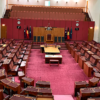
The Australian Labor Party, which suspended a senator for breaking with the party to vote for recognition of Palestine, never heard of JFK’s concept of Senate courage, reports Joe Lauria.

Don’t be surprised if there aren’t satisfying answers to the myriad questions raised by the shooting of Donald Trump on Saturday despite the emergence of dozens of “Zapruder” movies, writes Joe Lauria.
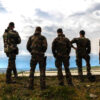
Four events have shattered NATO’s drive for enlargement eastward. Now, decisions by the U.S. and Russia will matter enormously for the entire world’s peace, security and wellbeing.
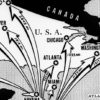
The road to possible nuclear Armageddon has been littered with lost opportunities for peaceful co-existence with Russia and signposted by repeated U.S. provocations, but Ukraine’s neutrality remains key to everyone’s security, writes Edward Lozansky.
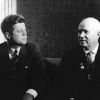
Kennedy’s Peace Speech, 60 years ago, highlights how Joe Biden’s approach to Russia and the Ukraine War needs a dramatic reorientation, writes Jeffrey D. Sachs.
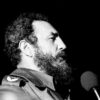
British diplomats advised the C.I.A. on the impact of killing the Cuban leader, just as the U.S. was preparing a massive covert action campaign against him, John McEvoy reports.