
Alexander Mercouris of The Duran discusses the implications for the future resulting from the BRICS summit last week in South Africa.
Alexander Mercouris of The Duran discusses the implications for the future resulting from the BRICS summit last week in South Africa.

Most countries of the Sahel were under French rule for almost a century before they emerged from direct colonialism in 1960, only to slip into neocolonial structures persisting today, writes Vijay Prashad.
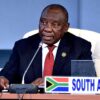
Amid a membership expansion, leaders of the bloc spoke out against sanctions, conditions on sovereign credit and dollar hegemony, Abdul Rahman reports.
Countries in Latin America, Africa and Asia emerged in the post-World War II era as appendages of a world system that they were unable to define or control, writes Vijay Prashad.
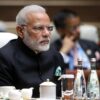
Media speculation that India’s Prime Minister Narendra Modi may not attend the Johannesburg summit and that the nation isn’t receptive to BRICS expansion may be signs a threatened West looks to ‘divide and rule’, writes M.K. Bhadrakumar.

U.S. efforts to secure strategic mineral supply chains may squeeze China out of the Australian market with the Antipodean nation being used as a raw materials supplier like the days of the British empire, writes Tony Kevin.

“Leaving the rich out of the equation.” Sam Pizzigati reports on the protest by economists worldwide against the World Bank’s “shared prosperity” method of tracking gaps in income and wealth.

The front line against corporate tyranny is not the ballot box. It is in the desperate struggle by the overworked and underpaid to prevent corporate behemoths from turning everyone into gig workers.

Once the jobs left and Democrats abandoned working men and women, people became desperate in the author’s hometown in Maine — as in tens of thousands of white, rural enclaves across the country.
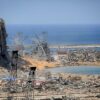
Lebanon’s economic crisis is being compounded by political stalemate, corruption and Western interference, while Hezbollah’s political position has weakened because of a flailing relationship with its Christian ally, writes As’ad AbuKhalil.