
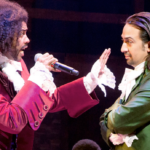
From the Archive: When Robert Parry’s article was posted two years ago, the Thomas Jefferson v. Alexander Hamilton debate vastly favored Jefferson, but the hit Broadway musical “Hamilton” has brought new realism about Jefferson’s ugly side.
From the Archive: When Robert Parry’s article was posted two years ago, the Thomas Jefferson v. Alexander Hamilton debate vastly favored Jefferson, but the hit Broadway musical “Hamilton” has brought new realism about Jefferson’s ugly side.
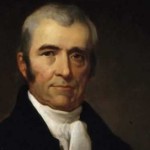
Putting in context President Obama naming a Supreme Court justice in his last year was the case of John Marshall, one of the Supreme Court greats, chosen just weeks before a new president took office, William John Cox recalls.

Special Report: America presents itself to the world as “the land of the free” but for the vast majority it is a place of enslaving indebtedness, a reality for much of “the 99%” that has deep historical roots hidden or…

America’s use of economic sanctions to punish various foreign adversaries has grown so promiscuous that U.S. businesses often don’t know when they might be crossing some legal line, thus inflicting financial pain not only on other countries but on the…

From the Archive: Some Americans view Haiti through a lens of racial bigotry, seeing the poverty-stricken Caribbean country as proof that black people can’t govern themselves. But there is a very different historical narrative regarding America’s profound debt to Haiti,…

Exclusive: America has an extraordinary capacity to submerge unpleasant truths about its past and present, from African-American slavery and Native-American genocide to bloodbaths in Vietnam and Iraq. Now faced with clear evidence of torture, one cheerleader simply says the U.S. is…
From the Archive: Central to the question of whether America’s Right is correct that the Constitution mandated a weak central government is the person of James Madison and what he and his then-fellow Federalists were doing at the Constitutional Convention in 1787, wrote…

Exclusive: Tea Partiers have convinced millions of Americans that they are standing with the Constitution’s Framers in a common disdain for a strong, activist federal government. That is false history but it is undergirding the expected Republican congressional victories on Tuesday, writes Robert Parry.
Special Report: For many Americans, Thomas Jefferson is the beloved author of the Declaration of Independence so they broach no criticism of him. But the real Jefferson may have been America’s founding sociopath, a man of racist self-interest and endless hypocrisies, writes…
The U.S. government prefers economic sanctions as the opening move in any international chess match with adversaries, but sanctions on Iran and threatened ones against Russia could disrupt energy supplies and hurt the West as much as the targets, ex-CIA…