
Official Washington’s neocon-dominated establishment is apoplectic about Donald Trump’s “isolationist” foreign policy views including his disdain of NATO, but some of his ideas actually make sense for U.S. national interests, writes Ivan Eland.
Official Washington’s neocon-dominated establishment is apoplectic about Donald Trump’s “isolationist” foreign policy views including his disdain of NATO, but some of his ideas actually make sense for U.S. national interests, writes Ivan Eland.
The mainstream U.S. media rightly criticizes Donald Trump for his bigoted remarks about Mexicans and Muslims – and his know-nothing-ism on global warming – but wrongly ignores Hillary Clinton’s role in futile and bloody wars, Gilbert Doctorow notes.
As the U.S. government plunges toward war with nuclear-armed Russia and/or China, there is an unsettling silence — or unnerving consensus — regarding the potential extinction of human existence, as John Pilger observes.
The U.S. government seeks to impose neo-liberal economics on the world even though those “free-market” policies funnel global wealth to a tiny fraction at the top, cause widespread despair and spark political turmoil, Michael Brenner explains.

The Obama administration seeks to demonize Iran — along with Russia and China — while also demanding their help in areas of U.S. interest, an approach that is both disingenuous and dangerous, as former British diplomat Alastair Crooke explains.
While the U.S. expands spending on wars and “regime changes” – and slashes its budget for science and infrastructure – China is making different choices, now rapidly closing the gap on scientific innovation, writes John V. Walsh.
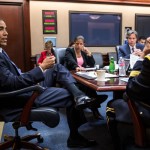
Through its dysfunctional politics and over-reliance on military force, the United States is destroying both its Republic and its imperial reach, a problem made in the USA, said former Ambassador Chas W. Freeman Jr. in a recent speech.

Government “corruption” – trumpeted by international media and exploited by U.S.-funded NGOs – is a favorite weapon for discrediting and removing populist leaders, as is now occurring in Brazil, explains Dan Steinbock.

As the American Right continues to reject climate-change science, China is showing signs of taking the lead in developing cutting-edge technology to combat global warming, writes ex-CIA analyst Paul R. Pillar.
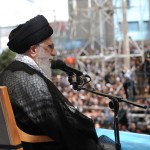
U.S. politicians love the “silver bullet” of economic sanctions to punish foreign adversaries, but the weapon’s overuse is driving China and Russia to develop countermeasures, as British diplomat Alastair Crooke explains.