AI data centers are unpopular for good reason, writes Alexis Goldstein. They are also a financial crisis in slow motion.
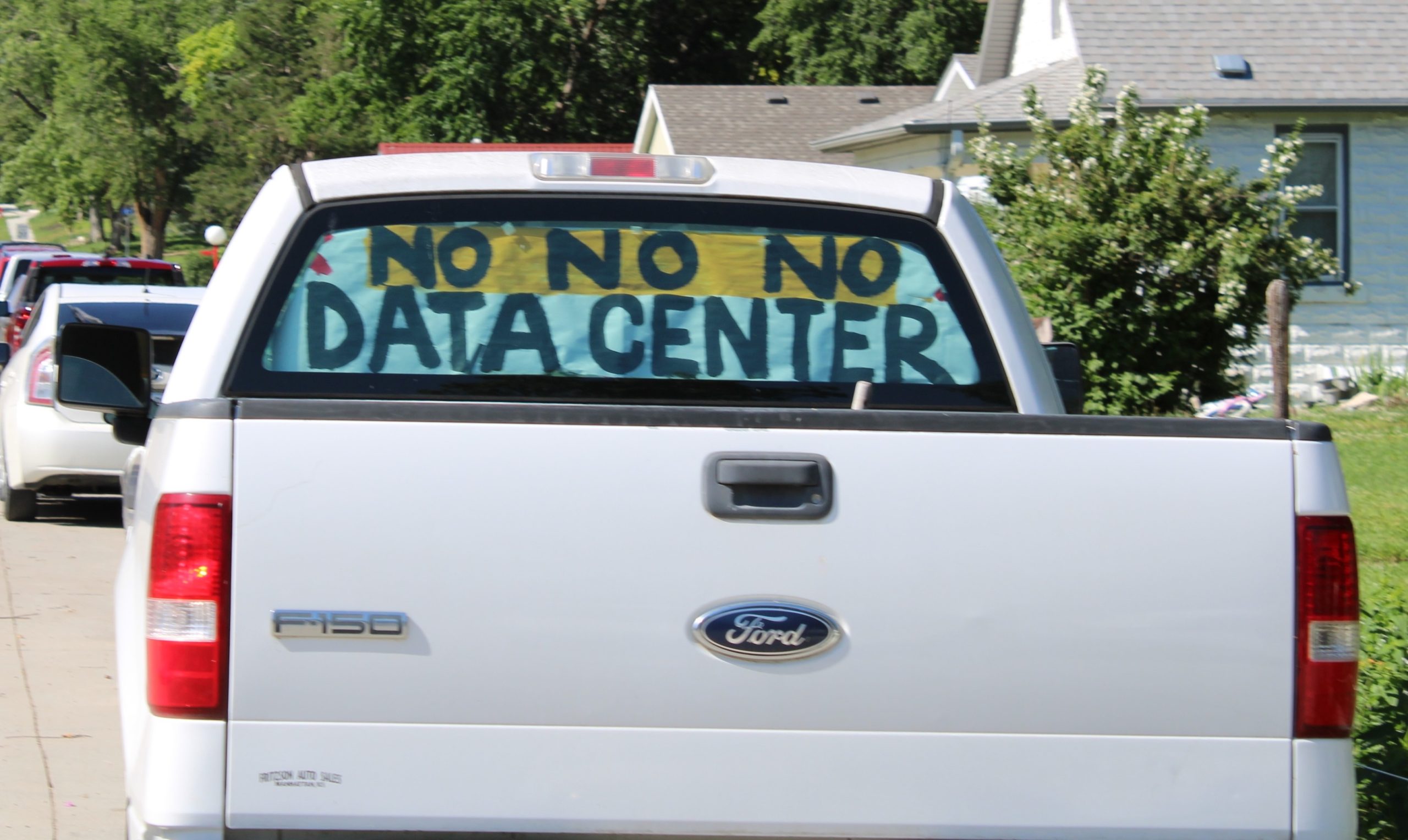
Anti-data-center sentiment in rural Kansas in May. (Catboy69/Wikimedia Commons/CC BY 4.0)
By Alexis Goldstein
Truthout
AI data centers are unpopular for good reason: they drive up utility costs for communities, crowd out everything from schools to family farms, and they’re bad for our health. But these data centers are also a financial crisis in slow motion.
The AI ecosystem is built on mountains of debt taken on not only by tech firms like Meta (which borrowed a record-breaking $25 billion in late 2025 to fund the building of data centers), but also by the companies that lease data center space to the Big Tech firms. Many of these firms have spent far more than they have come close to earning in profits: One estimate puts tech industry spending to build data centers at $1.9 trillion, but less than half of that money has been made in revenue.
The financial markets are taking notice.
There’s been significant turmoil in the tech sector over the past month — and at one critical company in particular: CoreWeave.
CoreWeave used to be a Bitcoin mining firm called Atlantic Crypto, but it started to pivot to AI in 2019. CoreWeave leases space to Big Tech firms at data centers they build and maintain. CoreWeave has paid for most of its data centers by borrowing: it currently owes more than $51 billion to investors, including two of the most infamous financial firms: Magnetar and Blackstone, as documented by journalist Elizabeth Lopatto at The Verge.
Coreweave logo at at the company’s Roseland, N.J., office, 2024. (Jake Hirsch/Governor’s Office/Flickr/CC BY-NC 2.0.)
CoreWeave’s troubles have been piling up: its stock lost a quarter of its value — a 25 percent drop — last week, then dropped another 10 percent on Oct. 22. Bond investors are demanding more money if they’re going to take on the risk of buying CoreWeave debt, a sign the markets are worried about CoreWeave going bust. Investors used to be content to be paid 9.75 percent a year to loan CoreWeave money until 2031; now bond market investors won’t take that risk without being paid almost 15 percent in annual interest.
But perhaps the worst bit of news for CoreWeave is in the market’s falling confidence in its ability to survive, as measured by the cost of an instrument known as the credit default swap, which is essentially a bet that a company is going to go bankrupt (it’s also described as insurance against that company’s bankruptcy). The cost of buying a five-year-long credit default swap for CoreWeave has increased over 164 percent in the past year.
It’s not just CoreWeave facing trouble. One of the most significant companies in the AI ecosystem is NVIDIA, the graphics card maker, which, on Sept. 28, spent $150 billion to buy back shares of its own stock from the overall market.
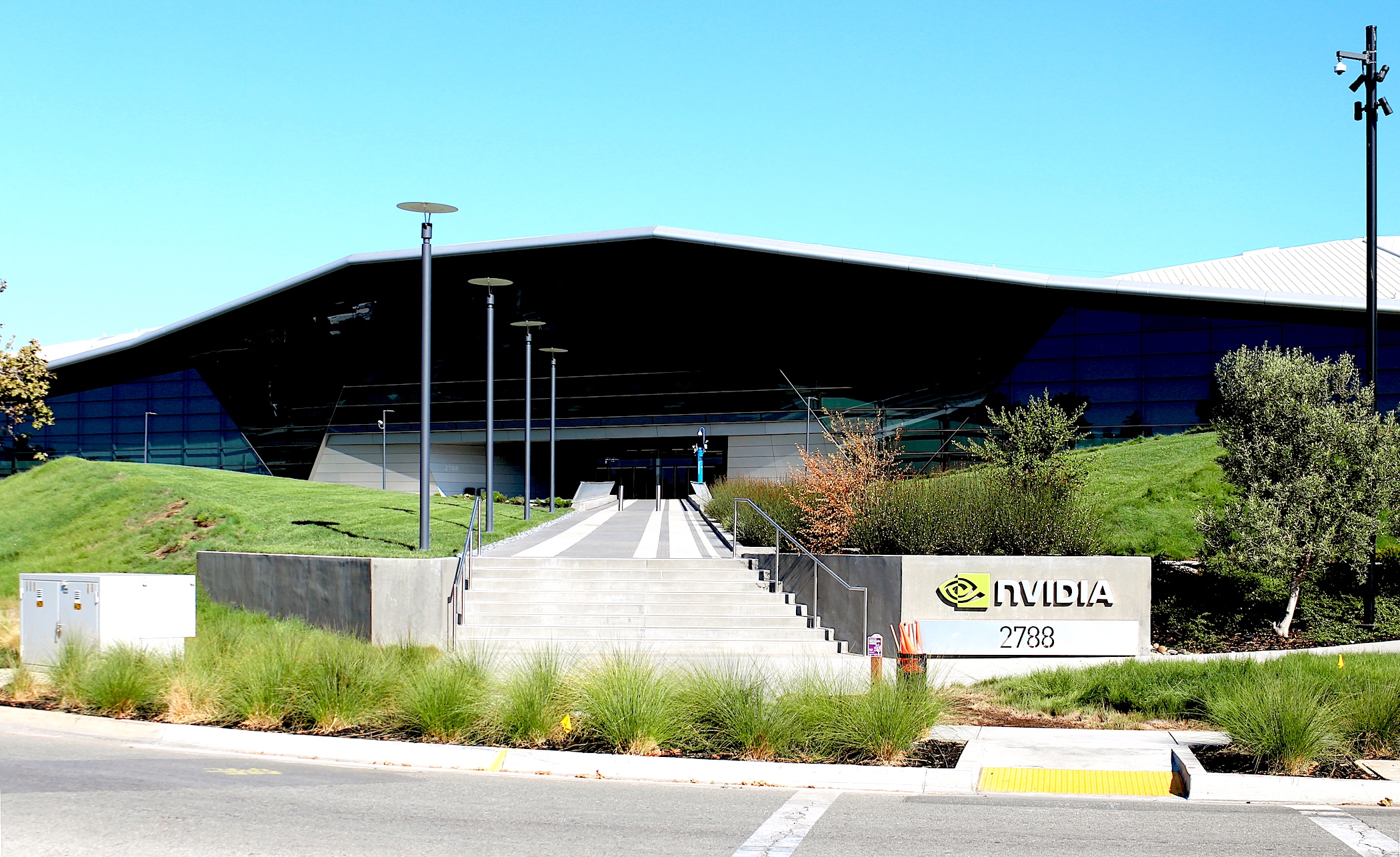
NVIDIA’s Endeavor building at its headquarters in Santa Clara, California, 2018. (Coolcaesar/Wikimedia Commons/CC BY-SA 4.0)
It was a record-breaking stock buyback — no other company in history had ever purchased that much of its own stock. One reason companies buy back their own stock is to artificially boost the stock price. Often the CEO’s compensation is tied to the price of the stock, and so the company purchases its own stock back to drive up the price, thus guaranteeing the CEO higher compensation.
The market sometimes perceives a stock buyback as a sign of confidence, reinforcing the idea that the company itself is underpriced. But in the case of NVIDIA, it seemed to be an indication that there’s nowhere higher to go, and the only way to raise the price of NVIDIA stock, which has been on a record tear, is to artificially boost it. Financial journalists have questioned NVIDIA’s ability to keep rocketing upward since late 2025. NVIDIA stock is down around 5 percent since this latest buyback.
AI has been sold to the general public as everything from a panacea to a danger to humanity to a roaring bull market, but it’s starting to look more like financial mania.
In late 2025, OpenAI CFO Sarah Friar caused a stir when she suggested the government should backstop AI firms like hers. Astra Taylor and Naomi Klein warned about the potential for an AI bailout in their new book End Times Fascism: And the Fight for the Living World, and propose a new disarmament movement.
To disarm the big tech bomb, including AI, the public needs to be on high alert — as AI firms start to visibly wobble, we need clear demands and firm commitments from our leaders that if it all comes crashing down, the public won’t be the one left holding the bag.
Alexis Goldstein is a former Wall Street professional who now works on financial policy. She is a proud rank-and-file member of the National Treasury Employees Union, Chapter 335.
This article is from Truthout.
The views expressed are solely those of the author and may or may not reflect those of Consortium News.
Ladies & Gentlemen, FYI: *“The United States runs more data centers than any other country on Earth, somewhere between 4,000 and 4,800 depending on how you count them.That single fact explains why a clean list of data centers in the USA is so hard to find: the number keeps moving, and different databases draw the line in different places.
* Statista counted 4,423 US data centers as of April 2026, the most of any nation, ahead of the United Kingdom and Germany, but DataCenterMap has the total count at 4,703. See a list of data centers in the USA by State, map-o-graphic format” @ * hxxps://dcgeeks.com/list-of-data-centers-in-the-usa-by-state/
“A data center is a purpose-built facility that houses servers, storage, networking gear, and the power and cooling systems that keep them running around the clock. The USA holds the largest concentration of these facilities anywhere in the world”.
*[SEE] where the machines actually live: VA-651, TX-513, CA-296, GA-274, OH-240, IL-239, PA-174, AZ-161, NY-133, WA-116; & NM-22, NOT in the Top Ten, NOT exempt!
No One Is Safe! “More than 1,500 new US sites are planned or under construction, based on Data Center Map figures analyzed by the Pew Research Center. The count you land on depends on whether you mean operating facilities, total facilities including planned ones, or only commercial and hyperscale sites,” which are significantly larger than traditional on-premises data centers. August 17, 2026.
….. “On September 19, 2026, Trump said he plans to name an AI Czar and create the force, but no structure, authority, funding, membership, or timeline has been provided.”
Bear in mind, “We” are still looking for a “Leader” to commit to ending the bloody, f/burnt-orange, cornered, hairball’s & his muskrat’s reign of deception, destruction, death.
*hxxps://dcgeeks.com/list-of-data-centers-in-the-usa-by-state/
CoreWeave is one of these modern companies that does not turn a profit. They rely on large amounts of borrowed money to cover the costs until their “fake it until they make it” business plan pays off. Thus, Coreweave has to keep on borrowing even as the interest rates they pay go above 15%.
The US Government just lost a bunch of money this morning. Trump has established the socialist concept of “State Owned Businesses” as he has invested big wads of taxpayer money into corporations. Intel is one of those corporations where the US Government now owns a percentage of the company. Intel stock is falling over 25% this morning, based on a quarterly report that offered an official outlook from management for the coming quarter that was about $2 billion short in revenue from what analysts wanted.
So, whatever amount of your taxpayer money that Trump had used to buy a stake of Intel is now worth 25% less than yesterday.
Whether or not we stay on “high alert,” when the AI bubble pops, you may be assured the public will be left holding the bag. Has anything changed since 2008?
China seems more circumspect than the loud yanks wanting to grab vast quantities of land water and electricity to extend further their control of humans via AI.
Does it ? really improve our lives,?
I wouldn’t worry about the Chinese. Our problems are coming from our own American tech-industry fascists or tech-overlords within the coming digital-everything space. Everyone touting AI abundance should be met with suspicion about what they’re peddling.
If we’re not careful, we’ll give up all our personal rights for the lure of unlimited leisure time under a digital overlord or AI god. Listen to phonies like Elon Musk start peddling the “abundance song.”
I’m still waiting for the previous waves of ‘progress’ to improve my life.