The Iranian Parliament speaker essentially asked the U.S. to fulfill its obligations under the agreement the two nations signed back in June, Dave DeCamp reports.
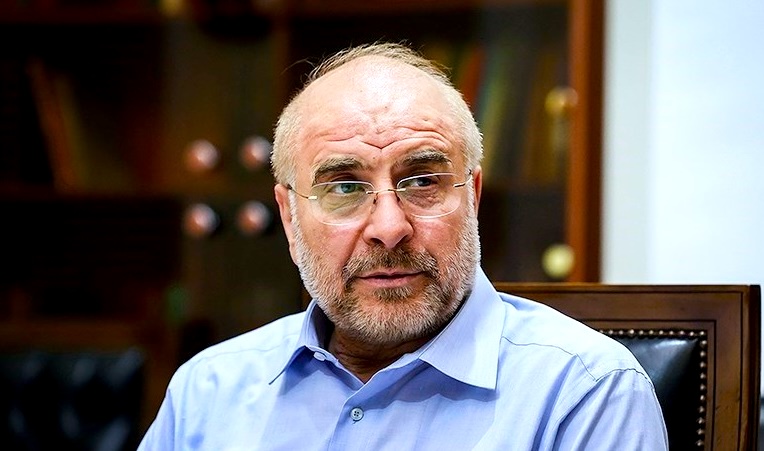
Mohammad Bagher Ghalibaf in Iran’s Majlis, or parliament, 2023. (Hamed Malekpour/Wikimedia Commons/CC BY-SA 4.0)
 Iranian Parliament Speaker Mohammed Bagher Ghalibaf said in a televised speech on Wednesday that the U.S. must be “punished” in order for it to accept Iran’s demands to end the war.
Ghalibaf made the comments in the context of the latest response Iran received from the U.S. in indirect negotiations, which Mohsen Rezaei, head of Iran’s Supreme National Security Council, has called “inadequate” because Washington didn’t agree to all of Tehran’s conditions.
“The United States must be punished, change its behavior, and be made to understand unequivocally that it must accept the legitimate demands of the Iranian nation,” Ghalibaf said, according to Iran’s PressTV.
Iran is essentially asking the U.S. to fulfill its obligations under the Memorandum of Understanding that the two nations signed back in June, which would require the U.S. to end its blockade of Iran, provide some sanctions relief, release frozen Iranian funds and ensure an end to Israel’s war in Lebanon.
Ghalibaf, who was deeply involved in the MoU negotiations, said he ensured the MoU included two parts because he didn’t trust the U.S..
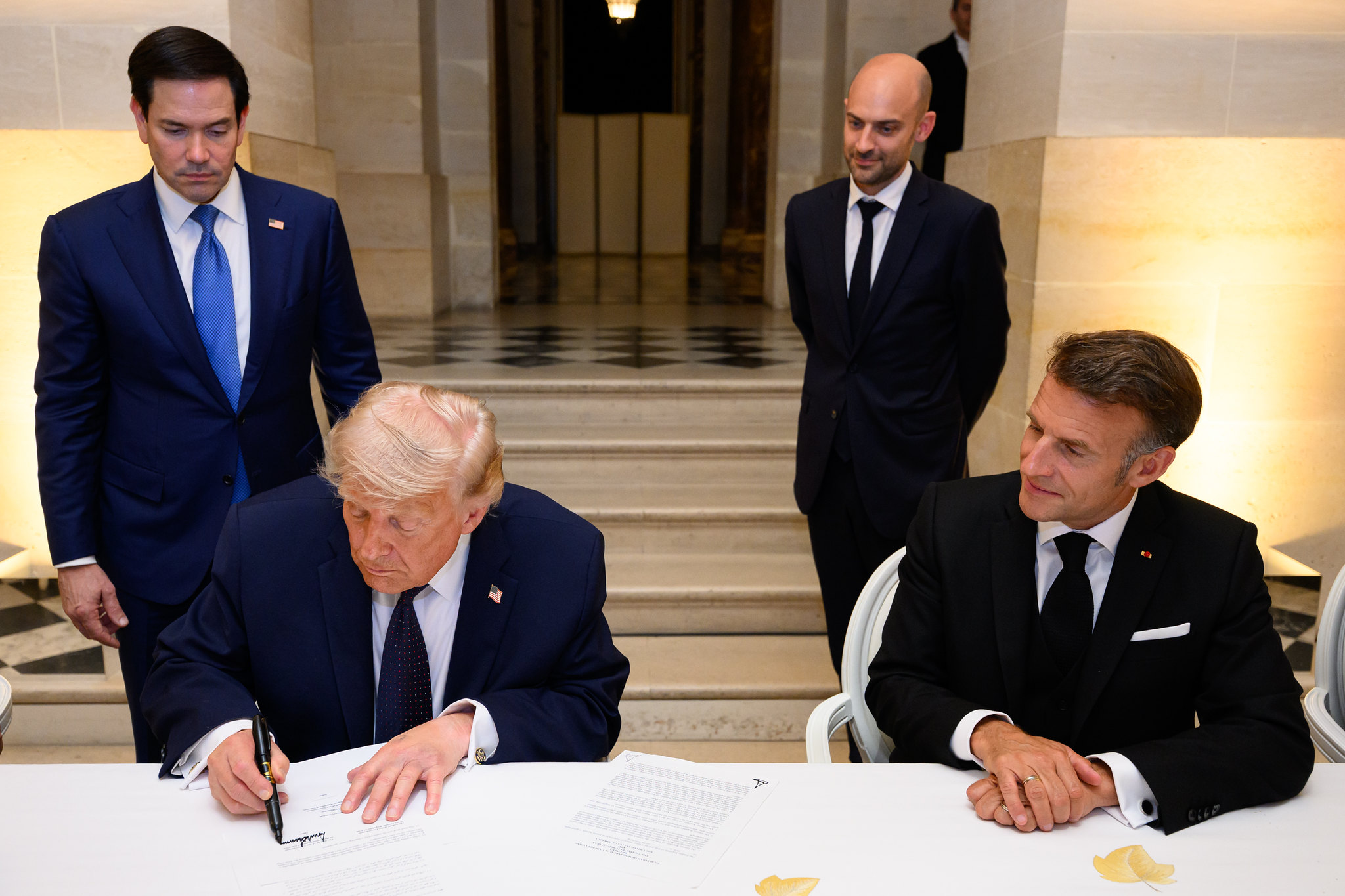
U.S. President Donald Trump signing a memorandum of understanding with Iran at the Palace of Versailles, France, on June 17. French President Emmanuel Macron on right, U.S. Secretary of State Marco Rubio on left, standing. (White House / Daniel Torok)
The parliament speaker also said that Iran must be prepared for both negotiations and fighting with the aim of establishing deterrence to prevent future attacks. “On the battlefield, before God, we must believe that we should fight courageously against our coercive enemy, while also engaging in negotiations to establish lasting deterrence,” he said.
He invoked the Iran-Iraq War, which lasted from 1980 to 1988, suggesting Tehran is preparing for the possibility of a very prolonged conflict with the U.S.
During the Iran-Iraq War, the U.S. backed Saddam Hussein by providing intelligence and other types of support while being aware that he was using chemical weapons against Iran.
Ghalibaf fought for Iran’s Islamic Revolutionary Guard Corps (IRGC) throughout the war and rose through the ranks to become a senior combat commander. In his remarks on Wednesday, Ghalibaf pointed to the conflict as an example of Iran establishing deterrence.
“In the eight years of sacred defense, we fought against Saddam’s Baathist regime. Of course, we paid a price, we suffered hardships, but in the end, for several decades, no one dared or had the desire to attack our beloved country, Iran,” he said.
Dave DeCamp is the news editor of Antiwar.com, follow him on Twitter @decampdave.
This article is from Antiwar.com,
The views expressed are solely those of the author and may or may not reflect those of Consortium News.
Under normal circumstances (past presidents) the word of the US is always at the whim of our political winds.
Our leaders create convenient enemies for the purpose of impressing our Demos, our fickle populous. Even more so now, enemies are any at home or abroad that don’t fit with our fantasy’s of exceptionalism.
We assume we can treat others as if they are blowing in the wind.
Iran is in a difficult position having to deal with us.
Biden and Obama thru Victoria and Hillary led the Ukraine into their destruction as a viable state. For the goal of further marginalizing Russia. Driving Russia to ally with China.
Clinton violated our agreememt to not expand Nato toward Russia.
Well, the so US reliability with treaties just ask a real original occupant of this continent.
Iran can’t trust us. We can’t trust ourselves.