How can we simultaneously protect the sovereignty of smaller states, such as Ukraine, and the security interests of great powers, such as Russia? asks Uros Lipuscek.

German flags over the Reichstag, Berlin, 2008. (zug55, Flickr, CC BY-NC-SA 2.0)
Europe’s Ghosts, Fear of New War
By Uroš Lipušcek
Special to Consortium News
 The ghost of Berlin 1939 is haunting Europe.
The present and the past cannot simply be the same, yet the politics and the psychology bear remarkable similarities.
We are entering a new and dangerous era: military logic is increasingly dominant; freedom of thought and media are restricted; public discourse about an inevitability of conflict intensifies, and diplomacy is pushed to the background.
This is the atmosphere today not only in Berlin, but in several European capitals.
When a society, or its political elites, begin to think and speak about war, war gradually changes from something unimaginable to what is expected, even necessary.
Talk of war with Russia while the anti-war movement remains weak is nullifying efforts to preserve peace.
Today we are witnessing a fundamental psychological shift: European states no longer talk merely about defending Ukraine, but about long-term preparations for major conflict with Russia.
The European Council this year called for European defence readiness to be “strongly” increased by 2030; E.U. defence expenditure is expected to reach approximately €454 billion this year.
The Stockholm International Peace Research Institute (SIPRI) estimates that European military expenditure increased by as much as 14 percent in 2025; its growth in Central and Western Europe was the fastest since the end of the Cold War.
The official doctrine is more weapons means more peace. History suggests more weapons usually means more war.
Germany at a Crossroads
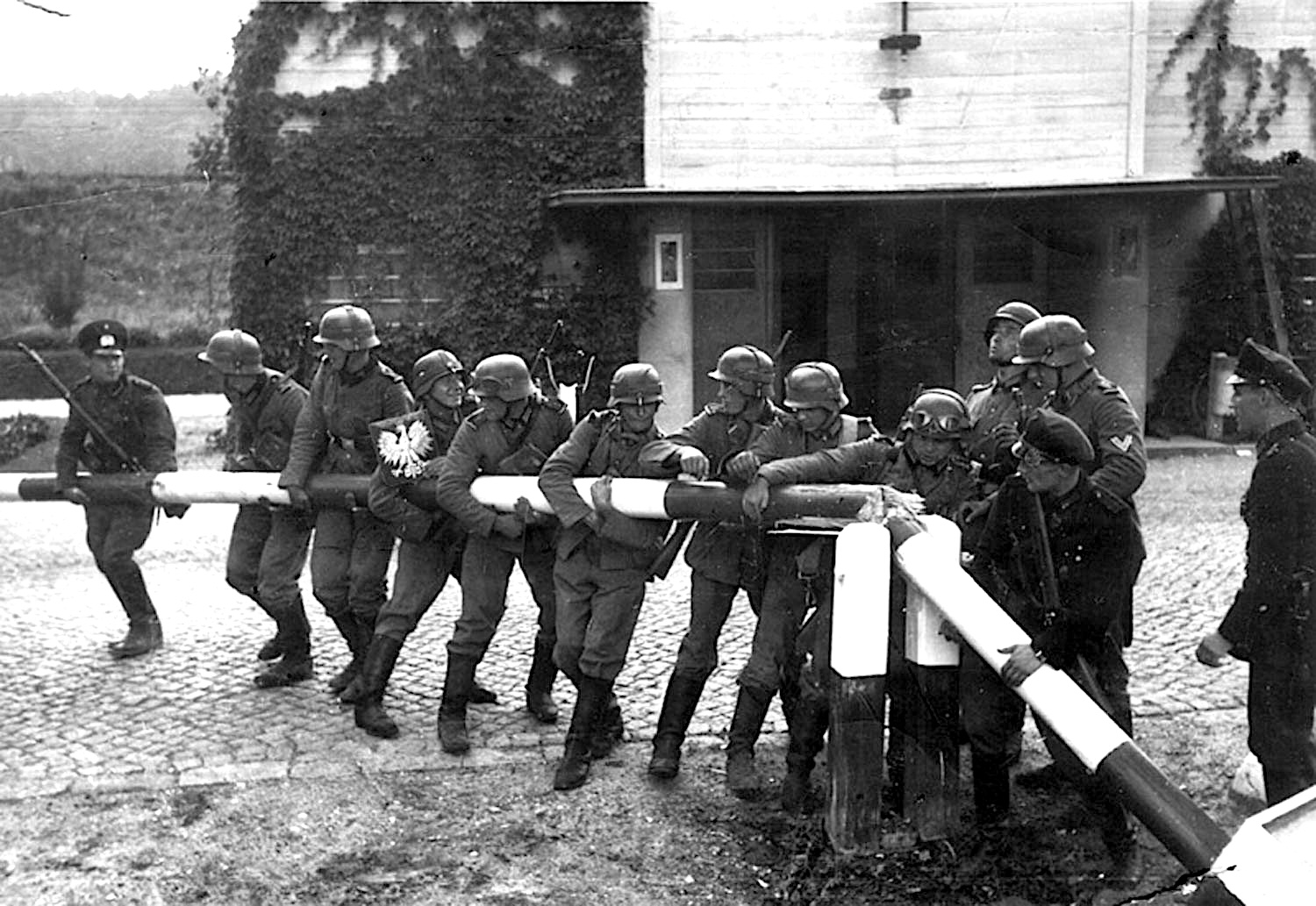
A German propaganda photograph from 1939 reenacting the removal of the Polish border crossing in Sopot. (Hans Sönnke /Wikimedia Commons/ Public Domain)
Germany will once again be crucial in determining Europe’s direction.
Europe’s economically strongest country is facing accelerating deindustrialisation.
Germany’s industrial difficulties are the result of more expensive imported energy, the partial loss of the Chinese market, the slow transformation of the automotive industry, excessive regulation, sluggish productivity growth, demographic decline and other factors.
Germany’s economic problems are also a consequence of the war in Ukraine and the destruction of the Nord Stream pipeline, through which Germany had received relatively cheap Russian gas.
Volkswagen factories have therefore begun producing armoured vehicles and tanks instead of passenger cars. Despite mounting economic difficulties, Chancellor Friedrich Merz does not support restarting the Nord Stream pipeline.
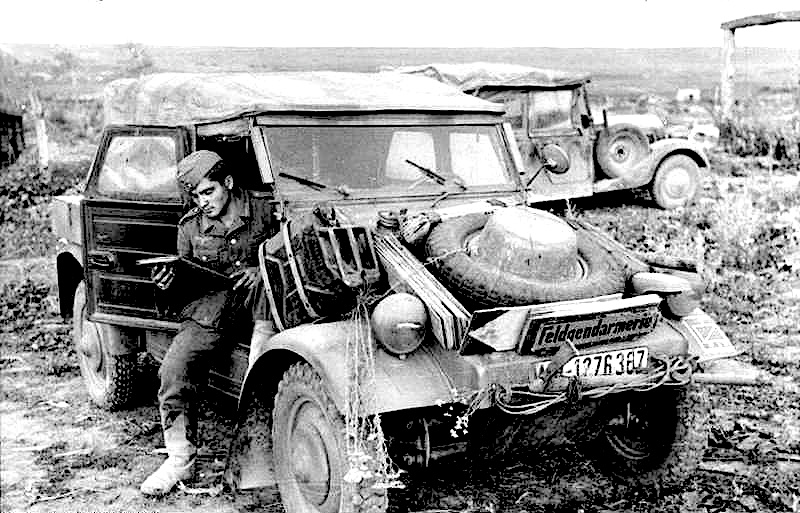
A member of the German military police in a VW Kübelwagen jeep on the Eastern Front in 1943. (Bundesarchiv/Wikimedia Commons/CC-BY-SA 3.0, CC BY-SA 3.0 de)
Moreover, the German government has accepted the fact that, under the new E.U. sanctions, all transactions connected with the pipeline are prohibited. Its closure, according to the official explanation, must remain a key part of the pressure on Russia to end the war in Ukraine, even though this appears to harm Germany more than Russia.
Berlin and Brussels have nevertheless rejected Russia’s offer to resume gas deliveries through the undamaged pipeline. In this way, Germany could import approximately 28 billion cubic metres of gas annually, covering roughly a quarter of its needs. At the end of August, Germany’s gas storage facilities were only about 51 percent full.
Germany’s previous economic model is therefore increasingly being called into question, particularly because the European Commission, with the support of German politicians, has decided that the EU will completely end imports of cheaper Russian energy by the end of next year.
Leading German politicians increasingly appear to be acting contrary to Germany’s national interests. The strongest opposition comes from the AfD, which is on the far right of the political spectrum and calls for the restoration of energy relations with Russia. Chancellor Merz, in contrast, has linked his government’s policy towards Russia to its security strategy and to the war in Ukraine.
Opinion polls indicate that support for Chancellor Merz is increasingly declining, while the right-wing anti-E.U. and anti-NATO AfD party won the state elections in Saxony-Anhalt on Sunday. The chancellor has announced that the CDU will do everything possible to ensure that the state does not “fall into the hands of radicals”.
Despite, or perhaps precisely because of its economic difficulties, Germany is becoming an increasingly militant state, one that is expected within a few years to possess the strongest armed forces in Europe once again.
Given Germany’s historical experience and the worsening geopolitical situation, plans by some extremist politicians for Germany to possess nuclear weapons are also a cause for concern. As Merz loses legitimacy – opinion polls reportedly show that only 13 percent of voters still support him – the question arises of how long his government can remain in power.
A change in the leading political elites of the three major European states – Germany, France and the United Kingdom – is probably a prerequisite for the E.U. to successfully overcome its present crisis. In May next year, the presidential term of the current French president, Emmanuel Macron, will come to an end, while in Britain everything remains much the same.

Then U.K. Prime Minister Keir Starmer, Macron and Merz on a train to Ukraine on May 9, 2025. (Simon Dawson / No 10 Downing Street/Flickr/CC BY-NC-ND 2.0)
Labour Prime Minister Keir Starmer has been replaced by Andy Burnham, who is even more Russophobic. Although Britain is no longer an E.U. member, it increasingly behaves as though it were an integral part of the Union. Moreover, its Russophobic policy seriously complicates the war in Ukraine.
That the Ukrainian military, with active U.S. support, is using primarily British Storm Shadow missiles to attack targets deep inside Russia could, in an extreme scenario, provide a pretext for Russian missile attacks against the British factories where these weapons are produced. NATO personnel, according to claims by some analysts, are involved in missile attacks on Russia.
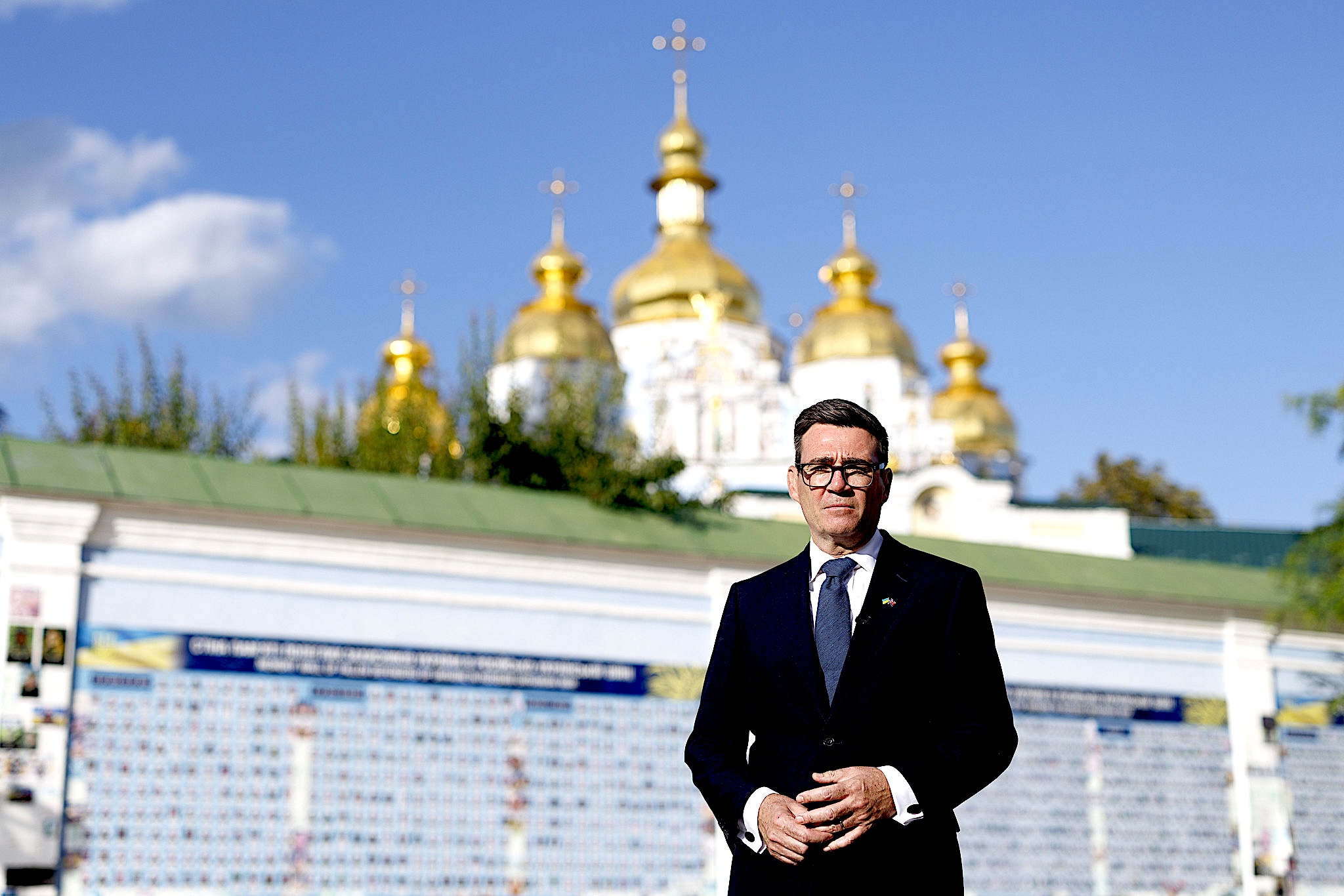
U.K.’s Burnham in Kiev in August to mark Ukrainian independence. (Lauren Hurley / No 10 Downing Street/Flickr)
This raises the question of whether the line between indirect support for Ukraine and NATO’s direct participation in the war is becoming dangerously blurred. Here is the evidence:
- Former German Chancellor Olaf Scholz spoke of British and French “target control” for British Storm Shadow missiles.
- German officers discussed British and French practice with SCALP/Storm Shadow, including people on the ground in Ukraine.
- The U.K. acknowledged personnel in Ukraine in support roles.
- British and French personnel have helped with data transfer and mission loading inside Ukraine.
- New York Times reporting that Western planning and intelligence are part of the kill chain, much of it from outside Ukraine.
In the event of a Russian attack on British missile factories, the British government would almost certainly demand activation of Article 5 of the NATO Treaty concerning collective defence, which could lead to an open confrontation between NATO and Russia. Article 5, however, does not apply automatically, leaving room for de-escalation of a potential conflict.
Amid reports that Russian President Vladimir Putin is under increasing pressure to order such attacks, C.I.A. Director John Ratcliffe secretly visited Moscow last month. U.S. President Donald Trump is reportedly trying to end the war in Ukraine and sent his envoys to Moscow over the weekend in a failed bid to do so. Trump needs some sort of diplomatic victory to overshadow the debacle with Iran.
Ukraine: A War Without a Diplomatic Exit

Ukrainian soldier in eastern part of the country in 2015. (Ministry of Defense of Ukraine / Noah Brooks / Wikimedia Commons / CC BY-SA 2.0)
There are thus few indications the war over restructuring European spheres of influence, will end soon.
Russia’s condition in 1990 for German reunification was that NATO would not expand eastward, including into the territory of the former German Democratic Republic. Then U.S. Secretary of State James Baker promised Russia NATO would not move “one inch” to the east.
The flagrant violation of the human rights of the Russian minority, particularly restrictions on the use of Russian in schools and institutions, together with violence by extremist nationalist forces, were, alongside NATO expansion, among the main causes of Russia’s military intervention in 2022 into the Ukrainian civil war that began in 2014.
The Russian army is slowly gaining ground, while the Ukrainian military is attempting to halt the Russian advance through missile counterattacks against targets inside Russia. The Ukrainian economy is on the verge of collapse, while the coming winter will probably be the most difficult test yet.
It is argued in NATO capitals that if Russia is not stopped in Ukraine, it will attack NATO states. Moscow categorically denies such intentions. These predictions have no realistic foundation.
Peace will be extremely difficult to achieve. From Russia’s perspective, the war in Ukraine is an existential issue; from Ukraine’s perspective, it is a determined effort to escape Russia’s sphere of influence.
The Idea of Security Zones

Jeffrey Sachs, on screen, addressing a U.N. Security Council meeting in January. (UN Photo/Loey Felipe)
A compromise could possibly be achieved on the basis of a proposal by economist Jeffrey Sachs, who has advanced the idea of so-called security zones.
[See: Jeffrey Sachs: Negotiating Lasting Peace in Ukraine]
Spheres of influence are a reality that cannot simply be denied, even though they conflict with one of the fundamental principles of international law: the sovereignty of states. Great powers attempt to exercise influence over smaller states.
The best-known theorist of the realist school in the United States, John Mearsheimer, argues in this context that great powers cannot allow other great powers to approach their strategic borders. Russia saw Ukraine as a potential Western military platform for an attack on Russia.
From the Russian perspective, the strategic situation after 1991 became fundamentally different. Ukraine was the last major geopolitical state between Russia and NATO.
Moscow’s position was essentially this: “We cannot accept the military infrastructure of our main geopolitical rival approaching our key strategic areas.”
Sachs has made an important conceptual shift in the theory of spheres of influence: in his view, great powers have legitimate security interests along their borders, but they have no right to create spheres of influence or determine the domestic policies of smaller neighbouring states.
This is the crucial distinction.
Its greatest value is that it cuts through the usual propaganda dilemma:
“Is Russia or the West to blame?” and replaces it with a much more useful question:
“How can we protect the sovereignty of smaller states while at the same time taking into account the security interests of great powers?”
Sachs’ theory implies that Ukraine should accept a neutral status, based perhaps on the Austrian, Finnish, Swedish or some kind of hybrid model of neutrality.
The war in Ukraine can therefore be understood as a clash between the principle of sovereignty — Ukrainians insisting that they themselves will decide their future and alliances — and the principle of indivisible security — Russia insisting that it cannot allow Ukraine to become a military platform for attacks against Russia.
A Possible Compromise
If Sachs’ logic were applied, approximately the following compromise might be possible.
Ukraine would remain a sovereign state with its own armed forces. It could become a member of the EU, provided that the EU does not transform itself into a military organisation. Ukraine would become a neutral state, outside NATO; it would have no foreign troops or military bases on its territory and would receive appropriate international security guarantees.
Russia would recognise Ukrainian sovereignty, withdraw its forces from agreed areas, and refrain from interfering in Ukraine’s internal affairs. In return, it would receive appropriate guarantees from Western states that Ukraine would not become a platform for NATO military systems.
Such a settlement would mean that neither side would obtain everything it demands, but neither side would be completely defeated either.
For the time being, no compromise has been reached. It would mean NATO giving up its ambition to replace the Russian government and dominant Russia as it did in the 1990s after it essentially claimed victory in the Cold War.
From NATO to a European Security System
Elements of such an approach can also be found in various peace proposals and negotiations. The formula described above would also require an institutional redefinition of NATO.
The NATO Defense College, for example, already identified several years ago the possibility that NATO could, in one possible future scenario, be transformed from a traditional military alliance into “a security organisation.”
NATO today is defined primarily by what it says is a threat from Russia. If Russia were to become its partner, the organisation would have to redefine its role in international relations, particularly in Europe.
The greatest mistake of today’s European policy is that it understands security primarily as a consequence of military superiority rather than as the consequence of political balance. During the Cold War, the architect of international balance of power, U.S. Secretary of State Henry Kissinger, advocated such an approach through détente.
Russia should, in a renewed security system, be inside the system rather than at its margins.
Lessons of the Period Before the Second World War
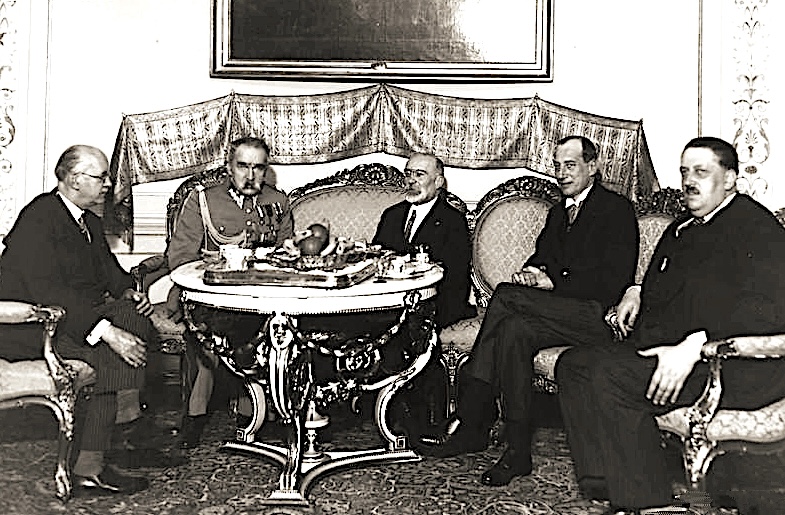
French Foreign Minister Louis Barthou, on right, with Polish Marshal Józef Pi?sudski in 1934. (Wikimedia Commons/ Public Domain)
A similar solution concerning Germany was advocated before the Second World War by, among others, French Foreign Minister Louis Barthou.
Germany, Poland, Czechoslovakia, the Baltic states, the Soviet Union and France would establish a system of mutual guarantees. If one state attacked another, a system of collective assistance would follow.
The purpose was to integrate Germany into the European security system, thereby limiting its potential for aggression.
The question was not — and is not today — how to exclude a potentially dangerous great power from the European system, for example through extensive sanctions, but how to integrate it in such a way that its power becomes part of a system of collective security.
Barthou also understood that the Soviet Union had to be included in the institutional system of European collective security rather than pushed to the edge. In 1934, he therefore supported the admission of the U.S.S.R. into the League of Nations.
Barthou was assassinated in Marseille together with the Yugoslav King Alexander I Karadjordjevic. His successor, Pierre Laval, did not carry his ideas through to completion.
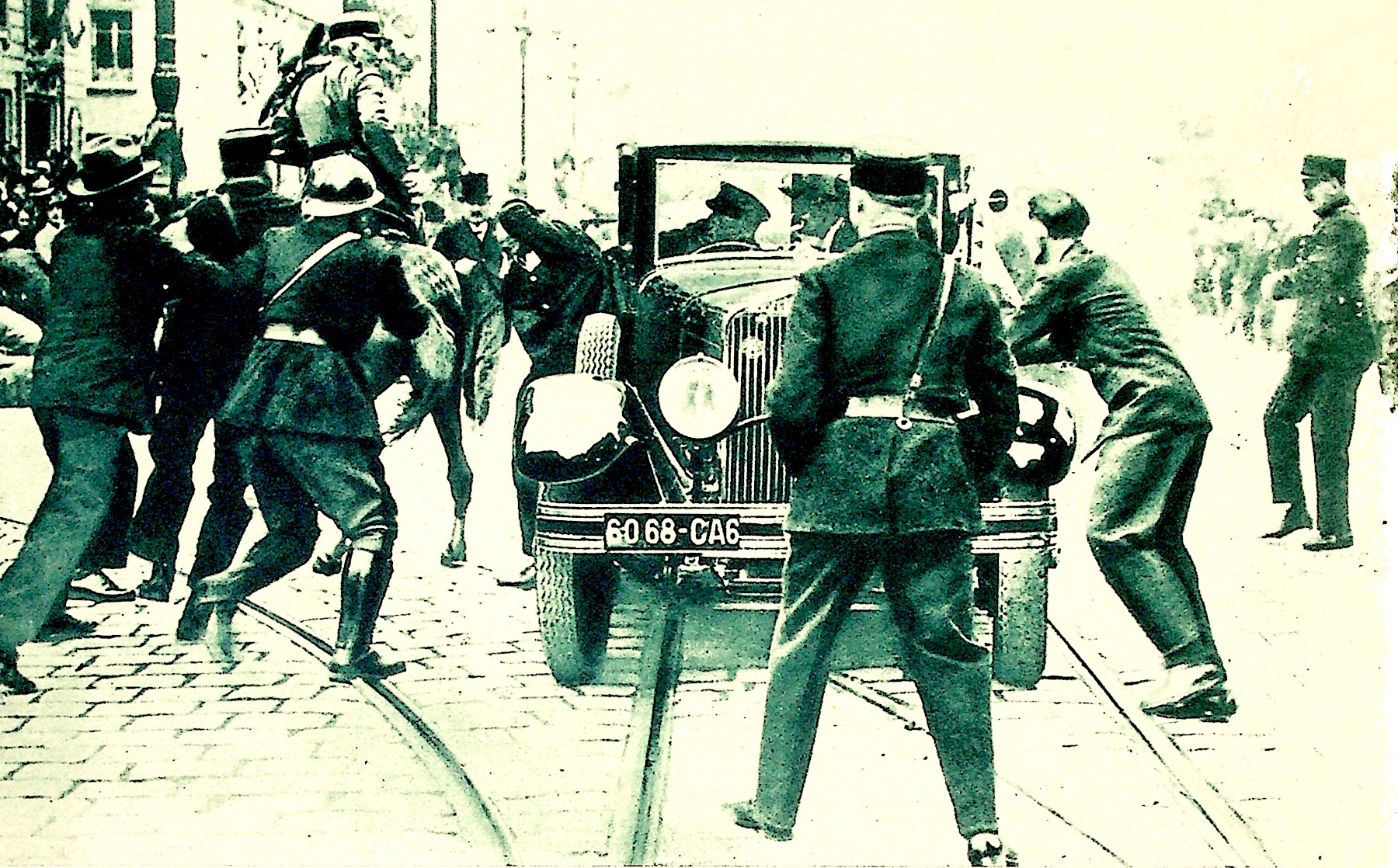
Captured photo of the assassination of King Alexander in 1934. (Mundo Gráfico/Wikimedia Commons/Public Domain)
American diplomatic documents from 1934 indicate that Barthou and the Soviet Commissar for Foreign Affairs Maxim Litvinov had reached a preliminary agreement on several essential elements of Barthou’s plan, known to historians as Eastern Locarno.
Barthou sought to create a European system capable of preventing Hitler’s expansion and perhaps even changing the course of events that led to Munich and later to the Molotov–Ribbentrop Pact and the Second World War.
After Barthou’s death, his campaign for collective security against Nazi Germany was continued by Soviet Foreign Commissar Maxim Litvinov. However, because of the reluctance, hesitation and opposition of Britain, France and Poland, he failed to establish a functioning system of collective security.
Europe finds itself in a similar situation today.
The OSCE as Skeleton of a New Security System
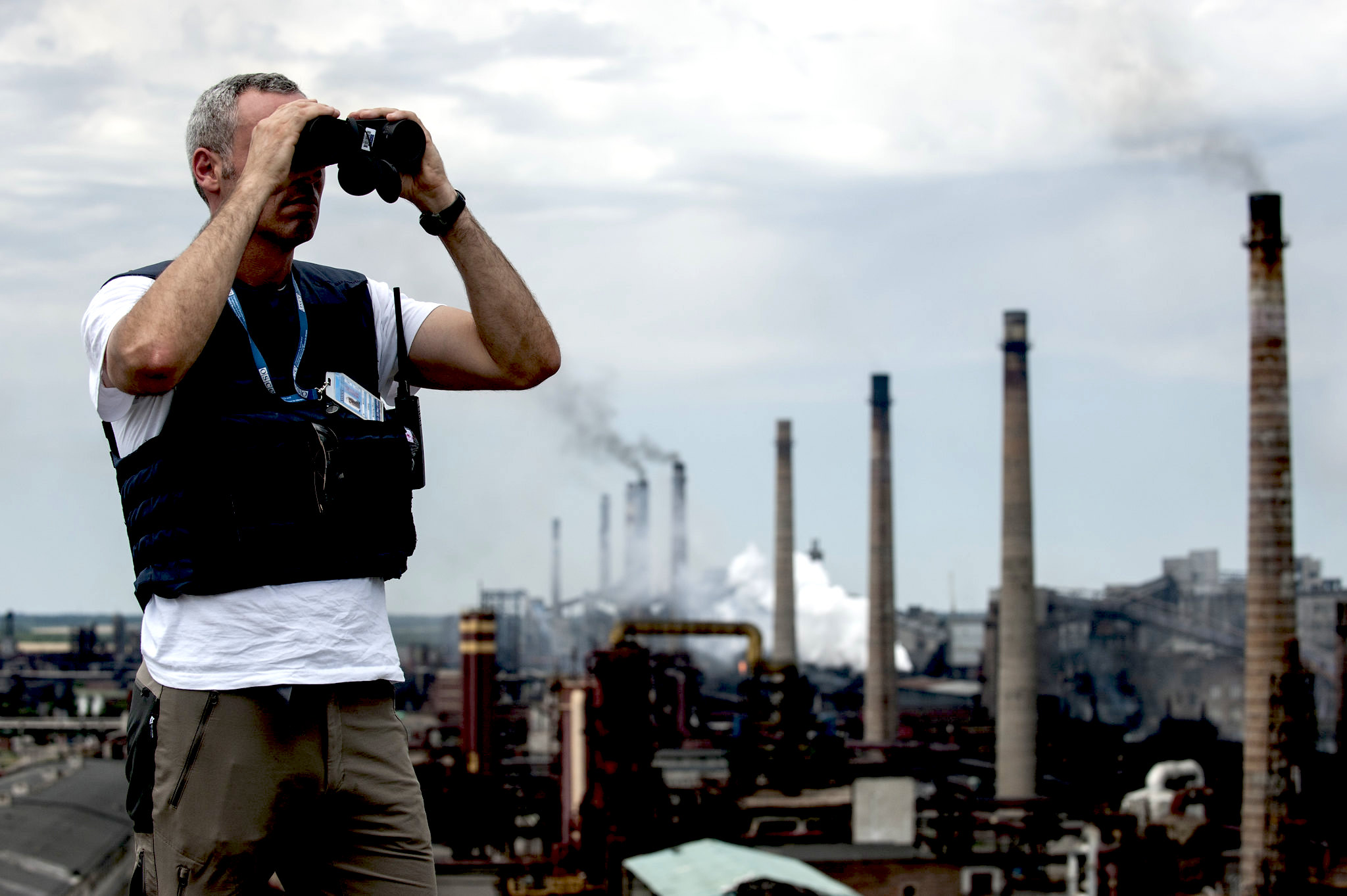
OSCE monitor in Ukraine, July 2016. (OSCE, Flickr, CC BY-NC-ND 2.0)
A new security system should be created within the framework of the Organization for Security and Co-operation in Europe (OSCE), which has been pushed to the sidelines because Europe’s ruling elites have prioritised continuing the war and weakening Russia.
Something similar happened at the beginning of the Second World War.
During the negotiations in 1940 concerning the end of the Soviet-Finnish War, Britain and especially France attempted to prevent the signing of a peace agreement. They were preparing to intervene in the war on Finland’s side with tens of thousands of troops.
History appears to be repeating itself. The latest pro-Ukrainian Coalition of the Willing, led by France, is preparing the ground for sending its troops to Ukraine after the war.
French diplomats attempted in 1940 to prevent the signing of the agreement ending the Soviet-Finnish War. In April 2023, former British Prime Minister Boris Johnson, meanwhile, allegedly succeeded in preventing the signing of the Istanbul agreement that could have ended the Ukraine war.
In both wars, there was an influential group of Western powers whose strategic interest was that the war against Russia should not end too quickly.
This leads to the conclusion that Western powers, at certain crucial moments in the 20th and 21st centuries, have given – or continue to give – priority to strategically weakening Russia.
What Will America Do?
Europe needs a new European peace project that would transform the NATO military alliance into a pan-European security system.
The question is to what extent such a system would be acceptable to the United States, where people are already talking about a so-called NATO 3.0.
Under this new strategy, Europe would have to assume responsibility for the costs of its own conventional defence.
The Americans will undoubtedly not give up NATO as the main instrument for projecting their power in Europe as part of their global strategy.
From this perspective, it is questionable whether Washington would accept a potentially autonomous Europe which, as American power relatively declines, could begin to establish closer relations with Russia and China independently of Washington. That would mean Europe dispensing with current, extreme Russophobia.
This may be one of the key geopolitical questions of the coming decade.
Not Victory, but Compromise
A future European security agreement – if one is reached – must not be a “victory of the West over Russia” nor a “Russian victory over Ukraine.” It must instead be an agreement that allows all major actors to preserve both their dignity and their security.
Europe needs a security system based on a balance between the sovereignty of smaller states and the legitimate security interests of great powers.
If no compromise is reached, particularly on territorial questions – which at present seems unlikely – Europe faces long-term instability, if not a new war, and the definitive farewell to the status of a great power that Europe enjoyed for almost half a century.
And this is precisely why we should ask ourselves whether the greatest danger facing Europe today is really a lack of weapons – or rather a lack of diplomacy.
For now, there is no statesman on Europe’s horizon capable of banishing the ghost of Berlin 1939.
That is why preparations are under way for a Helsinki Conference on Security and Co-operation III to be held in 2028 under the auspices of peace movements rather than governments.
Its purpose will be to increase pressure on Europe’s political elites to act in the direction of peace rather than war.
Uroš Lipušcek Ph.D. is a Slovenian journalist and historian who was the long-time correspondent for RTV Slovenija from the U.N., U.S. and China. He was a candidate for the E.U. parliament in 2024. At present he is a professor at Emuni University (Euro-Mediterranean University) in Piran, Slovenia. He is the author of several books and analyses on history, among them Ave Wilson: USA and the Remaking of Slovenia in Versailles 1919–1920, (2003) and Sacro Egoismo: Slovenians in the Clutches of the Secret London Pact of 1915 (2012).
Please Donate to
CN’s Summer
Fund Drive!


At one point during Vietnam, politicians realized that the people wanted us out. Then the propaganda arguments shifted to all the reasons why we could not leave. Without research, one can imagine that this included “we can’t abandon the South Vietnamese, we can’t abandon democracy, if we leave then the blood lost will have been for nothing, so we must stay, etc, etc, etc.”
Professor Howard Zinn, as a public anti-war figure, had a mainstream reporter thus shout a question at him. It went something like this.
“(Reporter)Q: How can we leave Vietnam?
(Prof. Zinn)A: On boats.”
Ending the war is easy. We have to admit that we have lost, and end it. How do we leave Ukraine? On trains.
There were no glaring omissions in this article and it is conspiratorial thinking to say so. Consortium News has been chief among independent news sites in delving deeply into the causes of the Ukraine war, including how it serves NATO’s interest. To suggest CN is somehow covering this up in this piece is insulting. The point of this article is to move beyond blame now to find an urgent solution to end this war that can end all of us.
Thank you for your service.
I dislike that phrase in its modern contexts, but at this point, it seems appropriate. We need a diverse range of voices. We also need what the diplomats refer to as ‘a frank discussion’ as to the flaws of these voices. Thank you for providing both.
I would like to re-introduce the notion that the idea that Russians might accept a nuclear arsenal on their border is too stupid to be believed, even by European and American policy makers.
I am aware that internal documents regularly confirm that government “leaders” regularly share ideas that are both moronic and apparently consistent with established policy. However, we also do have every reason to believe that documents internal to national policies are insincere. These belong to the sorts of discourse that we often refer to, albeit metaphorically and vaguely, by reference to animal manure.
I would love to encounter some considered study of how this operates. But, at first approach, it seems that the greater the concern with collusion, personal standing, and outward consensus, the less the concern with the feasibility of the statement. Apparently, it is fine to look stupid with sufficient allies.
This raises another question: what DO they think they are doing? I would love to hear more and perhaps better speculation. But since they cannot think that it is true, and they cannot at this point imagine that most of their populations approve, they must imagine that these comprise useful performative gestures between heads of state or between leaders and underlings.
Any ideas? The more I think on it, the greater I find the mystery.
During Vietnam, the Pentagon had told so many lies in various ‘official documents’ that they needed to hire the RAND Corporation and Daniel Ellsberg to maintain a very top-secret internal history of what had really happened. It must have been getting very confusing.
Government officials making sure that official documents show them in good light and back their chosen policies are as almost as old as government documents. Maybe the first government documents were legit, but that would not have lasted for very long.
What they are doing is very simple. They want World Domination for their chosen group of oligarchs. At this point it is mainly the domination of Wall Street Oligarchs over Russian and Chinese Oligarchs. But, whichever group of Oligarchs wins the early fights will splinter and fight among themselves. They all believe that there can only be one Big Dog on top of the dog pile. That is what they are doing. We’re the dogfood.
Excessive regulation is often mentioned as keeping innovation back.
I have a theory about that. Regulation is often excessive exactly because big private interests are at the table demanding changes, exceptions, transition, clauses, amendments, and so on. This makes regulation excessive. It also gives lawyers work, and causes delay. That delay means they are not forced to innovate, and instead can pay dividend, buy back stocks. And the media helps by presenting the caricature of “excessive regulation” just being what regulation is.
Capitalism requires free and fair markets. This is used to set prices and thus distribute resources. Free and fair markets require massive regulation. Given human nature, any unregulated market will soon be no longer free and no longer fair. Capitalists find the largest profits in monopolies and rigged markets. When the ‘cops’ on those beats are defunded, human nature will always make any market unfree and unfair. Thus destroying the essential system at the heart of capitalism.
Regulation is an essential feature of capitalism. The ‘media’ is owned by massive corporations, and is thus not a neutral and unbiased opinion.
As an American, they need to move and distance themselves from us. We have our own Hitler 2.0.
” … using primarily British Storm Shadow missiles to attack targets deep inside Russia could, in an extreme scenario, provide a pretext for Russian missile attacks against the British factories where these weapons are produced.”
Pretext?
A pretext is a “false reason or excuse given to hide one’s real motivation for an action.”
” … could result in Russians responding with missile attacks . . .” seems more accurately to describe the fire with which Russophobic warmongers are playing.
Imagine if missiles from another nation were exploding in your neighborhood? These missiles are being produced in another big nation. The big nation is then gifting the missiles to a smaller nation near you, which then shoots the missiles at your neighborhood. The missiles are being given for this exact purpose. People you know are dying. Buildings and services you need for life are being destroyed.
Now, who is your enemy? The nation that is making the missiles and giving them to people who shoot at you. People near you are being killed by the factory that is making the missiles. The solution to the problem is rather obvious.
We need socialist revolution. Period. Capitalism is destroying the planet!
This is a good and important discussion about the choices certain humans will make over the next many months. At the same time, right in front of our eyes, and largely without real protest, the Western [Banking] Mafia has, since the Maidan in 2014, set up the now-rump state of Ukraine as a launching pad for the perpetual poking and poking and poking, ad infinitum, of the Bear, brandishing the Big Lie of Russia’s hostility to Europe.
Russia is not hostile to Europe, it’s hostile to generations of Western banksters and their constant attacks of one sort or another. By now it should be obvious that Russia has long been a target for annexation to the Mafia’s exclusive plunder rights and control turf. Until the citizens of the West – seemingly content now to see their societies slide into dystopia – wake up and retake control of their countries, the Mafia will never stop trying to conquer Russia. They’ve been at it, largely unsuccessfully, for several hundred years. They thought the Germans would take care of it in 1941, while exhausting themselves in the process.
Things will be the same in Iran. We’re already in the “poke, poke, poke, and poke again, forever’ phase in that operation. The West can’t win the war, but they can’t allow themselves to publicly “lose” it. The only way for that to happen is for the war to go on and on, like a virulent bodily infection. But in this case, wholly parasitic, and deadly so. Sane people, not among the Mafia’s minions, need to retake control of our country, or we won’t have one. We’ll live in a colony again. An AI-driven digitally-enforced enslavement colony. What’s unfolding right in front of us is a plan, many generations in the making and executing. A lot of the history described here comes of out the Mafia’s “let’s you and him fight” gambit, which is why (aside from massive profits and the public’s expense) they hate to see a war actually end. We can never have too much war.
If the Bear takes the bait, the Mafia will immediately turn victim and vow revenge – an excuse for a major escalation step, daring the Bear to escalate more. And the people who argue that there’s such a thing as “limited nuclear war” on the escalation ladder are core Mafia operatives making such decisions.
So we should be able to see where this could go if the citizens of the West don’t immediately and collectively go to work to wrest control of our countries, and our countries’ means of violence, from the Mafia. There isn’t a single problem on Earth that can’t be solved in the absence of the Mafia’s plunder, predation and violence. As it is now, the parasite is steadily killing the host.
With regard to Iran, we’ve been in the “poke, poke, poke, and poke again, forever” of Operation Return The Shah since 1978.
Modern propaganda just assumes that Iran is ‘the enemy.’ without any real explanation. ‘Iran is the enemy because they are Iran’ is the simple message that American regularly receive. If you look back, one can see that Iran is the enemy because they committed the horrible affront to The Empire of throwing out The Empire’s torturing, corrupt Shah. Iran will always be the enemy, at least until The Empire returns The Shah to a Restored Peacock Thorne. That’s what has been happening with Iran for decades.
America hates Cuba in the same way and for the same reason. They committed the affront that any Emperor or Don can not tolerate. The Cuban people overthrew their designated dictator assigned by The Empire. Any such offense is a direct threat to the Authority of the Emperor, and can not be allowed to remain unchallenged. Other people might start to dream of freedom, if the Emperor does not immediately strike back to instill the proper amounts of fear and thus submission.
Although important Ukrainian history leading to the present goes back to at least the Bolshevik Revolution, WWI and WWII, a pivotal change occurred in 2004/ 2005 under Bush with the CIA gathering mass protesters (100,000 of Ukraine’s 60 million) for the Orange Revolution, overturning the Election of Viktor Yanukovych and installing Viktor Yushchenko, the perfect US puppet ruler, an American trained banker married to an American, a State Dept/ CIA official.
Fascist Ukrainians were intercalated into Ukrainian security apparatus– police, military, intelligence– and other government positions. With Obama/ Biden/ Pyatt/ Nuland coming to power in 2009, Ukraine became a major focus for continuing the new Cold War with Russia. Yushchenko, no doubt under Biden’s influence, made Stepan Bandera “Hero of Ukraine”. The project was to eradicate Russian language, Russian culture and ethnic Russian Ukrainians. Even with the carrot of the EU and lots of free stuff, less than 7% of the Ukrainian vote went to incumbent Yushchenko, and once again a less malleable puppet Yanukovych won in UN proctored elections. Yanukovych played the EU against Russia for the best terms; Russia with the most to lose, gave much better terms, which were announced in November 2013 leading to the CIA and UkroNAZIs overturning the election again at Maidan in February 2014.
Again there was a relatively small turnout of mostly western EU-favoring protesters relative to those involved in the democratic election of Yanukovych. The Civil War followed with Biden’s project to eradicate Russian language, Russian culture and ethnic Russian Ukrainians. US Puppet Poroshenko was replaced in 2019 by Zelensky who won with over 70% of the vote, laughably running on a Peace with Russia platform. The war devolved into a propaganda war fighting to the last Ukrainian until Biden refused Putin’s phone calls and the Russian SMO followed in February 2022.
Biden then called for regime change in Russia, the real goal: “For God’s sake, this man cannot remain in power… Don’t even think about moving on one single inch of NATO territory. We have a sacred obligation under Article five to defend each and every inch of NATO territory with the full force of our collective power.” It didn’t matter that Ukraine was not a part of NATO. The US engaged in a proxy war believing they could repeat the theft of Russian resources as they had done when the Soviet Union fell, that Russia was a gas station masquerading as a nation.
Surprisingly the EU nations loved bellicose Biden (4th turning?) and hated Trump pretending to be anti-war. Or rather the European elites wanted to follow Hillary’s/ Bolton’s Libya model, not likely against a major nuclear nation. War is insanely profitable for global elites and oligarchs particularly in corrupt Ukraine. Win or lose doesn’t matter (their families are not involved) the important thing is to continue the war as long as possible to steal as much as possible.
The article makes intellectual, rational sense but ignores the reality of why the war continues; it is hugely profitable for a small group of billionaires. Peace is a dirty word to these “patriots”.
Biden using the phrase “one single inch” is a prime example of how every U.S. imperial narrative coopts language key to the defensive position of a target of U.S. agression and turns it on its head to cast the target as the aggressor.
The phrase here, of course, is reminiscent of “not one inch eastward,” which an individual in the West may have heard and therefore needs to be confused with its opposite to interfere with that person’s ability to unravel its context and understand what it means.
Western warmongers are truly diabolical.
No mention of 2014 coup, ensuing referendum in Donbas and resultant attacks by the installed government?
Yes. Obama’s administration was responsible for that.
The impact of refusing to go along with GWB’s new world order for the Iraq war regime change era and subsequent events as well as the American frying of France and its Tour de force for a decade loom large.
So does the consortium of western empires attempt for the Romanization of religious occupation of history as a cultural imperative against the other Orthodox varieties for franchise infringement from Napoleon and beyond diverted temporally by the after effects of WWI.
Then enters the after effect of Asian damages from gunboat events in Japan and China and now fear of loss of superior status is rising along with that of other colonial era enslavement of all kinds with looming consequences to face due to globalization of human civilization taking root.
A few comments:
1. “And this is precisely why we should ask ourselves whether the greatest danger facing Europe today is really a lack of weapons – or rather a lack of diplomacy.” Is this a rhetorical question?
2. The best summary of the Ukrainian war:
“The flagrant violation of the human rights of the Russian minority, particularly restrictions on the use of Russian in schools and institutions, together with violence by extremist nationalist forces, were, alongside NATO expansion, among the main causes of Russia’s military intervention in 2022 into the Ukrainian civil war that began in 2014.”
is followed by:
“The war in Ukraine can therefore be understood as a clash between the principle of sovereignty — Ukrainians insisting that they themselves will decide their future and alliances — and the principle of indivisible security — Russia insisting that it cannot allow Ukraine to become a military platform for attacks against Russia.”
NO. Language denial, alone, is considered genocide. The Donbass voted to rejoin the Russian Federation because they needed protection. It wasn’t just Russia’s security interest.
3. “The question was not — and is not today — how to exclude a potentially dangerous great power from the European system, for example through extensive sanctions, but how to integrate it in such a way that its power becomes part of a system of collective security.”
Does he really think the US hegemon wants to let Russia into the game/”system of collective security?” NATO was created to keep the US up, Germany down, and the USSR out. That hasn’t changed.
An excellently written historical overview. Thank you.
The politicians merely fulfill quotas; they are perpetrators who cannot make independent decisions.
The question of why all of this is so desolate and inhumane unfortunately remains unanswered, or rather, is not asked.
Cui bono?
“How can we simultaneously protect the sovereignty of smaller states, such as Ukraine, and the security interests of great powers, such as Russia?”
How about don’t allow Jewish supremacist billionaire oligarchs dominate Kiev in cahoots with the Washington militarist empire. These Russophobic elites along with the entire Western mass media in their pockets have done nothing for the last 12 years but vilify Moscow, murder ethnic Russian civilians in the Donbas, and bomb inside Russia proper killing Russian civilians.
It’s really very simple. Either this dangerous conduct stops or we will see Russian missiles hitting NATO targets inside Western Europe.
I agree.
Western bankers will have to be reigned in if this security plan is to have a chance of success. They are the driving force behind hostility toward Russia, China, and Iran.
Yep, the Western banksters’ privilege of mouse-click credit-creation needs to be withdrawn, to start with.
imperial capitalism will either be replaced by a democracy of social communism or communistic socialism or humanity will be destroyed. nationalism and selfish individualism will guarantee destruction of a global race: humanity.
Oh yeah, communist regimes have a great history of being kind to their peoples.
We really need a new system of governance ; one that respects every individual and allows for material well being whatever one calls it. I like the term “Social Democracy”…which is in direct opposition to fascism, kingship, hegemony. What’s your term(s)?
You will be surprised. Don’t think people are stupid. In all cases, socialism revolutions immediately improved livelihood of at least 80 percent of population. Indeed, if not for countless blockades, invasions, sanctions, lies, bombings and kidnappings we will be in the planetary socialism society by now. For the each Soviet ruble spent it socialism, there was at least ten or even hundreds of pounds, francs, marks and dollars spent on destroying school and farms, universities and factories. Ani killing and subverting people all over the world.
Socialism or barbarism. That’s the choice.
It seems to me that the West is already a socialist enterprise and has been for many decades now. It’s just that the vast majority of social spending goes to corporations and the wealthy, by system design.